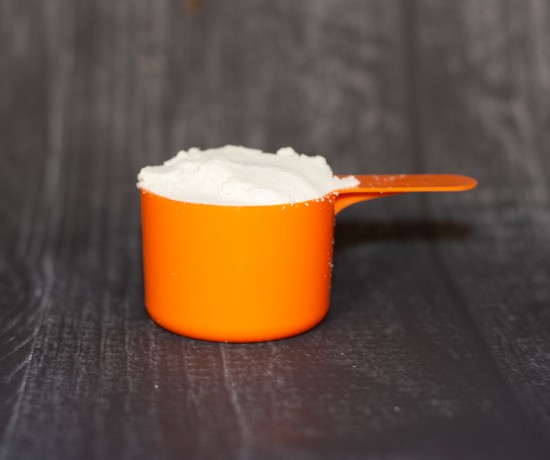

Creatine Nitrate: Benefits, Uses and How It Works

What Is Creatine?
Creatine is a naturally occurring compound that helps the body produce adenosine triphosphate (ATP), the primary energy source used during short bursts of high-intensity exercise.
By helping restore ATP levels, creatine supplementation can support strength, power output, and muscle performance during training.
Because of these benefits, creatine has become one of the most widely researched and commonly used supplements in sports nutrition.
Nick our Technical Support Officer has a great blog post all about the benefits of creatine, how to use creatine, and creatine research.
There are different ways you can take creatine, including in powder or capsule form, and there’s also a lot of online discourse around cycling creatine for muscle building benefits – learn more here.
What is Nitrate?
Nitrates are compounds found naturally in foods such as leafy green vegetables and beetroot. In the body, dietary nitrates can be converted into nitric oxide, a molecule that helps relax and widen blood vessels.
This process may improve blood flow, oxygen delivery, and muscle efficiency during exercise.
A review of 72 clinical studies found that nitrate supplements were beneficial for time to exhaustion and improved power output. Another study found that supplementing with nitrate was beneficial for maximising muscle power.
When creatine is bonded with nitrate to form creatine nitrate, the compound becomes highly soluble in water. This increased solubility can allow creatine nitrate to dissolve more easily and be used in smaller serving sizes compared with creatine monohydrate.

What Are the Benefits of Creatine Nitrate?
Creatine nitrate combines creatine, which supports strength and power, with nitrate, which helps promote nitric oxide production and improved blood flow.
Because of this combination, creatine nitrate may offer several potential training benefits.
Two studies examined groups using different doses of Creatine Nitrate supplements for weight lifting and measured their performance. Scientists saw improvements in the volume people were able to bench press, as well as improvements in their power and velocity - aka, they were able to lift more weight with more power and speed.
Further research suggests pre workout containing Creatine Nitrate has work-producing value when it comes to bench presses during training.
The combination of creatine and nitrate adds extra physiological benefits for exercise. Because nitrates can be reduced to form nitric oxide, it’s been shown to help reduce oxygen depletion, increase exercise tolerance, and improve muscle efficiency.
Creatine Nitrate may give you a slightly better pump because it has a 100% absorption rate due to the nitrate, compared with Creatine Monohydrate’s 98% absorption rate.
Is Creatine Nitrate Safe?
Current research suggests that creatine nitrate is safe when used at recommended doses.
Creatine Nitrate is a relatively new way of supplementing creatine, but studies have shown similar benefits and safety to Creatine Monohydrate. One study showed that supplementation of Creatine Nitrate over 28 days was safe.
As with any supplement, it’s important to follow recommended serving sizes and consult a healthcare professional if you have any existing medical conditions.
References:
- Gao, C., Gupta, S., Adli, T., Hou, W., Coolsaet, R., Hayes, A., Kim, K., Pandey, A., Gordon, J., Chahil, G., Belley-Cote, E.P. and Whitlock, R.P. (2021). The effects of dietary nitrate supplementation on endurance exercise performance and cardiorespiratory measures in healthy adults: a systematic review and meta-analysis. Journal of the International Society of Sports Nutrition, 18(1). doi: https://doi.org/10.1186/s12970-021-00450-4.
- Coggan, A.R., Baranauskas, M.N., Hinrichs, R.J., Liu, Z. and Carter, S.J. (2021). Effect of dietary nitrate on human muscle power: a systematic review and individual participant data meta-analysis. Journal of the International Society of Sports Nutrition, 18(1). doi: https://doi.org/10.1186/s12970-021-00463-z.
- Joy, J.M., Lowery, R.P., Falcone, P.H., Mosman, M.M., Vogel, R.M., Carson, L.R., Tai, C.-Y., Choate, D., Kimber, D., Ormes, J.A., Wilson, J.M. and Moon, J.R. (2014). 28 days of creatine nitrate supplementation is apparently safe in healthy individuals. Journal of the International Society of Sports Nutrition, 11(1). doi: https://doi.org/10.1186/s12970-014-0060-9.
- Galvan, E., Walker, D.K., Simbo, S.Y., Dalton, R., Levers, K., O’Connor, A., Goodenough, C., Barringer, N.D., Greenwood, M., Rasmussen, C., Smith, S.B., Riechman, S.E., Fluckey, J.D., Murano, P.S., Earnest, C.P. and Kreider, R.B. (2016). Acute and chronic safety and efficacy of dose dependent creatine nitrate supplementation and exercise performance. Journal of the International Society of Sports Nutrition, [online] 13(1), p.12. doi: https://doi.org/10.1186/s12970-016-0124-0.
- Jäger, R., Purpura, M., Shao, A., Inoue, T. and Kreider, R.B. (2011). Analysis of the efficacy, safety, and regulatory status of novel forms of creatine. Amino Acids, [online] 40(5), pp.1369–1383. doi: https://doi.org/10.1007/s00726-011-0874-6.
- Galvan, E., O’Connor, A., Goodenough, Y.C., Dalton, R., Levers, K., Barringer, N., Cho, M., Jung, P., Greenwoord, M., Rasmussen, C., Murano, P.S., Earnest, C.P. and Kreider, R. (2015). Effects of 28 days of two creatine nitrate based dietary supplements on bench press power in recreationally active males. Journal of the International Society of Sports Nutrition, [online] 12(Suppl 1), p.P17. doi: https://doi.org/10.1186/1550-2783-12-S1-P17.